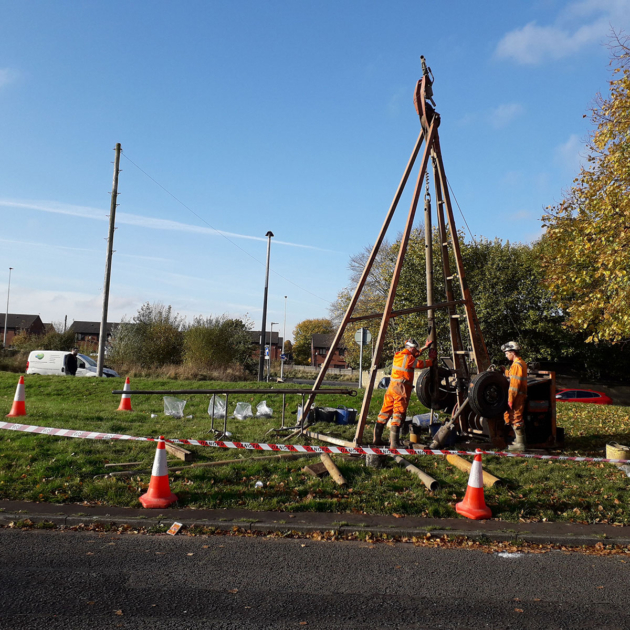

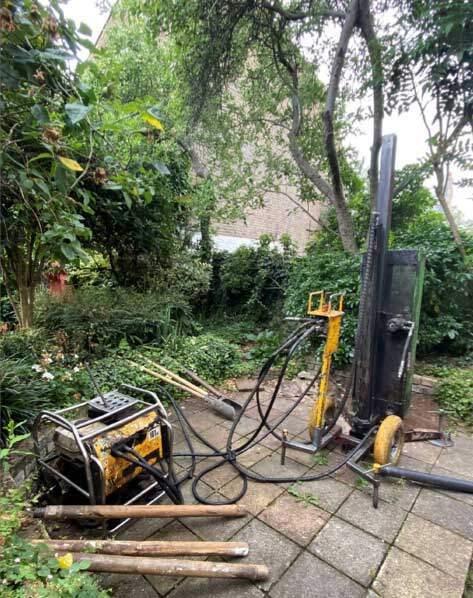
Earth Environmental & Geotechnical provide an extensive range of Ground Investigation services
Call now to discuss your development site.

Frequently Asked Questions
What happens after the Ground Investigation ?
An interpretive report will be compiled from all the information and data gathered from the ground investigations, testing, monitoring for the site. Our Earth Environmental & Geotechnical consultants can discuss the details of the report and provide further services as required including:
Remediation Design
Foundation Design
SuDS – Surface water drainage strategy
Earthwork Modelling Services
Earth Environmental & Geotechnical have been involved in Environmental & Geotechnical ground investigations for a wide range of developments click here for more information
Contact us now to discuss your development
All site investigations are conducted in accordance with strict and well defined health and safety practices with site specific method statements and risk assessments provided. Prior to commencement on site service (gas sewers, electricity etc.) information is acquired from the client (or its agents) with utility tracing conducted, if required.
Why do I need Ground Investigations?
Construction projects are frequently delayed by adverse site conditions or unexpected ground conditions. Conducting detailed Site Investigation / Ground Investigations can save you time and money.
Site Investigation Services enable you to have a detailed understanding of the ground conditions of your site. For a development to be successful you need to know exactly what you are building on and have a strategy to reduce the risks.
Many site investigations are conducted to discharge planning conditions and our staff always ensure, time permitting, that prior to delivery of a costed proposal an outline of the proposed works are initially discussed with the regulatory authorities.
So you may not get planning permission approved if you do not complete the correct site investigations and meet the planning conditions.
At Earth Environmental & Geotechnical our team have extensive experience in the design of geotechnical, mining and environmental site investigations in accordance with current best technical practices and planning guidance.
The team are able to manage geotechnical and geo-environmental investigations for the most demanding of sites. Our multi-disciplined regional offices include engineers, geologists, environmental scientists, drillers and technicians who are experienced in all aspects of ground investigation and remediation works.
What is Ground Investigation?
What is Ground Investigation?
Ground Investigation is used to assess the ground conditions and sub surface structure of a site, ideally before any construction starts. The ground investigations are an essential aspect of any development project, as having a detailed understanding of what you are building on is vital to the success of the construction process.
It is essential to gather an accurate understanding of ground conditions and to be able to assess if your proposed building designs are feasible from a geotechnical perspective e.g. foundation design, piling design, slope stability, road design, retaining walls, earthworks…
There are different techniques of intrusive Ground Investigation used depending on the specific development site and the proposed construction. The site investigation will collect geotechnical & environmental data and information to determine if the specific site is suitable for the planned development proposal.
The scope of the investigations and techniques used will depend on a range of factors including:
- The prior use of the site
- Anticipated geology and subsurface structures
- The proposed development design and function
- Known history of the site and the surroundings
- If the site is in a coal mining area
- If the site is in a flood zone
The Site Investigation is an essential step in understanding your development site and ground conditions. The intrusive investigations may assess a wide range of ground conditions including:
- The geology and hydrogeology of the site
- Are the different strata fairly homogeneous over the site or do local variations exist
- The groundwater conditions at the site, Will any part of the site be subject to flooding?
- The physical properties of soil and rock underlying the site with testing of the soil both in the laboratory and in-situ.
- The mechanical properties such as strength of different soil or rock strata
- Land Contamination
- Ground gases – radon, methane
More Information on Ground Investigations.
What Is the Ground Investigation Process?
Ground investigations are carried out with a phased approach. The first step in the process is to complete a phase 1 Desk Study ideally this should be completed at the early stages of the planning and development process and combined with a site walkover.
Overview of the Site Investigation process
- Phase 1 Desk Study
- Phase 2 Intrusive Site Investigation
- Phase 3 Post Site Investigations
- Phase 4 Site Investigations Report
Step 1 – Complete the Phase I Desk Study and site walkover.
A Phase 1 Desk Study is a preliminary risk assessment report for a development site, often required for planning application approval.
Ideally, a Desk Study should also be accompanied by a walk over a survey conducted by an experienced practitioner. By compiling available information in relation to a site’s environmental, geological, hydrogeological, hydrological and mining setting, a cost-effective and focussed site investigation will be developed.
A Phase 1 Desk Study should always precede any ground investigation.Using the interpretive report to highlight potential development issues, environmental and cost liabilities requiring further investigation.
Step 2 – Phase 2 Intrusive Site Investigations
A Phase 2 assessment consists of an Intrusive Site investigation with quantitative risk assessment. The Phase 1 Desk Study will highlight the areas for further investigation and define the scope of these works. Any potential pollutant linkages can then be prioritised for investigation and depending on the Phase 1 Desk study report the appropriate investigation techniques utilised.
Ground Investigation Techniques used as part of a Site Investigation
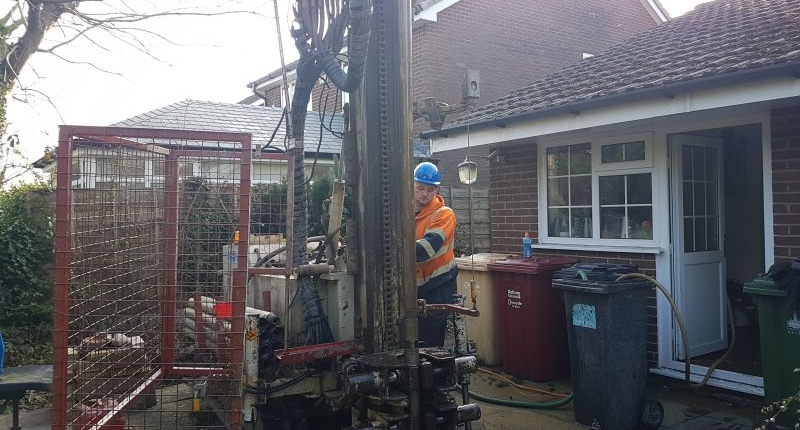
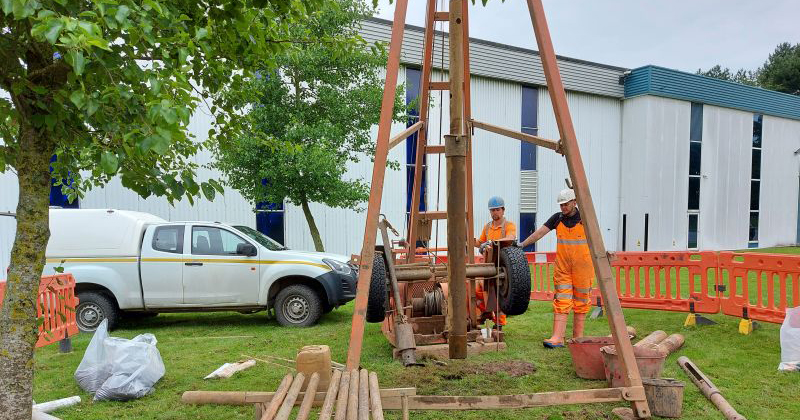
- Cable Percussive Boreholes
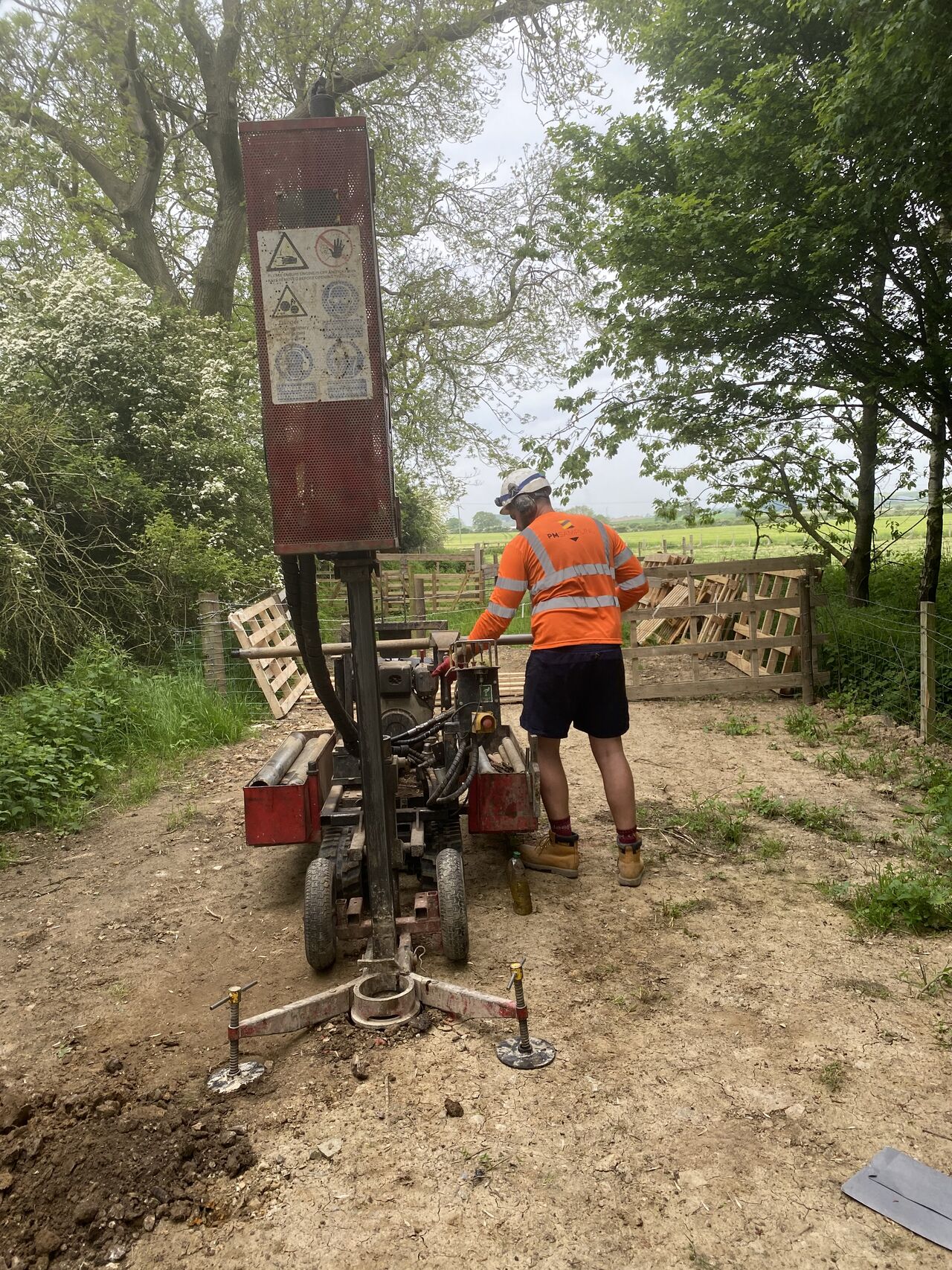
- Window Sample Drilling
- Deep Window Sample Borehole
- Rock Coring
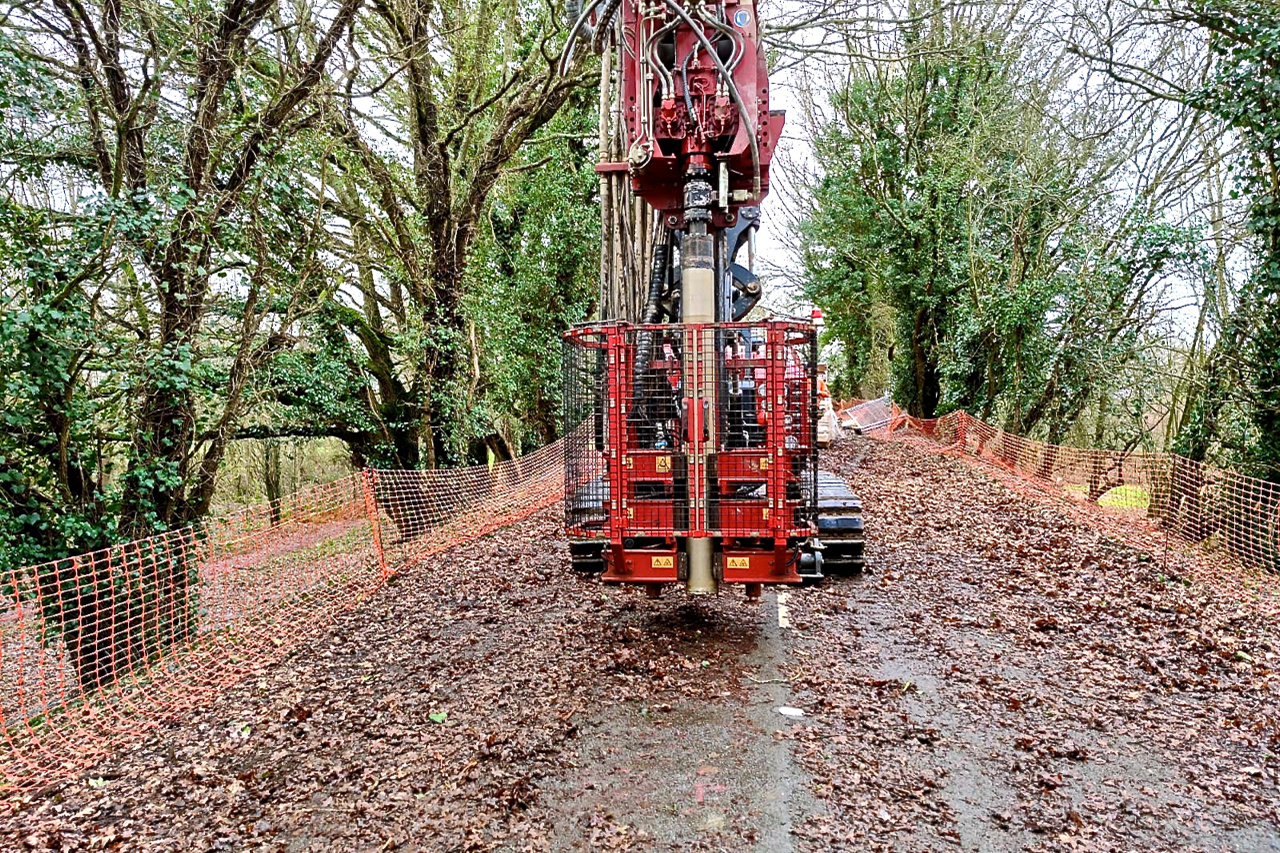
- Rotary Boreholes
- Rotary Core Drilling
- Dynamic Probing
- Trial Pits
- Trenches
- Windowless Sampling Rig
- Soakaway Testing
- Modular windowless sampling drilling rig
- Plate bearing testing
- California bearing ratio (CBR) testing
Step 3 – Post Site Investigations
Once the preliminary site investigations have been completed the results are analysed. If further site investigations are required these can be completed by our multi-disciplined team. These could include:
- Environmental Monitoring
- Soil Testing
- Geotechnical Monitoring
- Slope Stability Assessment
- Radon Monitoring
- Remediation Designs
- Gas protection measures.
Step 4 – Site Investigation Report
An interpretive report will then be compiled from all the information and data gathered from the ground investigations, testing, monitoring for the site.
Our Earth Environmental & Geotechnical consultants can discuss the details of the report and provide further services as required
If you are considering purchasing a site or property for development, or own land you plan to develop please contact Earth Environmental & Geotechnical to discuss our services and how we can help